

Anger Management – Useful Tips to Control Your Anger

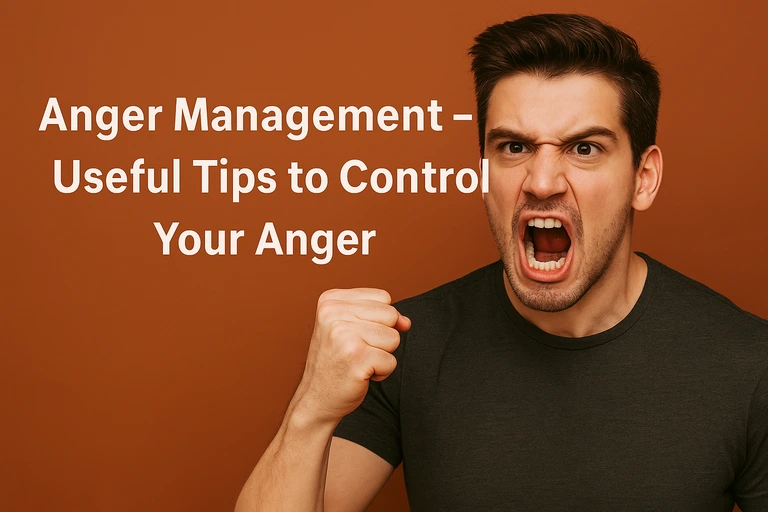
Have you heard the quote, “A hungry man is an angry man”? It’s probably one of the rare circumstances in which the emotion of anger is truly justified.
But let’s face it: anger, by itself, gets a bad rap among people for the disastrous consequences that occur as a result. Violence is the watchword, yet very few people make an attempt to understand the reasons behind the angered person’s actions – i.e., what or who made them angry.
Interestingly, the fight-or-flight response, which exists in both animals and humans, often manifests as anger in the latter and is considered by theorists as a “method of survival” against perceived threats.
But does this mean that it’s fine for you to lose your cool whenever you want? No, not one bit.
In most cases of uncontrollable anger, the person who is angry suffers, but it can also cause irreparable damage to others, which they will regret once their rage has dissipated.
So, if anger is normal, where do we draw the line? How do we know when it isn’t “fine”? Most importantly, when do we know that it has or will become a problem?
Usually, there are two instances in which we can easily identify when anger has become a problem:
#1: When We Feel It Too Intensely or Frequently

The more intensely or frequently you “see red,” the more it almost always affects your body and mind negatively. The fight-or-flight theory also mentions that the individual goes into hyper-alert mode when faced with danger or a threat, and increased blood pressure and heart rate are almost always visible every time someone loses their temper.
Over a period of time, when a person continues to lose their temper frequently or with intensity, this will exert a physical strain on the body, leading to health problems such as a weaker immune system, hypertension, and heart disease, to name a few.
But that’s not all – relationships with other people are ruined, one’s career can come to an abrupt halt, and gradually, you will find yourself all alone because people are intimidated and scared of your outbursts.
So, it bodes well that people realize that controlling their anger works in their best interests, both physically and mentally, as well as for the relationships and things they value.
#2: When Anger Is Expressed Inappropriately
As mentioned earlier, violence is frowned upon, and rightly so. Being aggressive or destructive won’t get you any fans, even if “blowing up” seemed the right thing to do at that moment. Of course, threatening behavior in the form of verbal or even physical abuse can happen, but at its very worst, one can even kill someone in a fit of rage.
And this is why psychologists always tell people to count to five or even ask themselves whether what angers them is really worth getting angry about in the first place.
Remember: it’s not wrong to get angry, but it’s definitely not right to express it in a manner that is considered threatening.
And this is what makes knowing when anger is a problem important, as there is a very fine line between anger and rage.
How Anger Affects Others
| Aspect | Impact |
|---|---|
| Spillover Effect | Anger at work or elsewhere often gets redirected to children, friends, or strangers. |
| Instinctive Response | Anger is a natural reaction to threats, but uncontrolled anger becomes harmful. |
| Personal Health & Emotions | Anger affects you physically (stress, tension) and emotionally, making situations worse. |
| Fear & Threats (Fight-or-Flight) | Anger directed at others triggers fear; people either fight back or withdraw, damaging relationships. |
| Isolation | Frequent outbursts drive people away, leaving you lonely and unsupported. |
| Forms of Threats | Can be physical, verbal, or non-verbal; all damage trust and safety, with physical being the most harmful. |
| Regret & Self-Blame | After angry outbursts, guilt often follows for words or actions that can’t be taken back. |
| Long-Term Harm | Victims of uncontrolled temper (children, partners, friends) may suffer lifelong negative effects. |
| False Belief in Aggression | Some believe anger or aggression gets results, but in reality, negotiation and maturity work better. |
| Biggest Consequence | Anger leaves you with regret and harms the people who matter most. |
Notice the Signs of Excessive Anger

Daniel Goleman, in his Emotional Intelligence, says that the most successful people are those who have mastery over their emotions – with anger being at the top of that list of emotions.
Almost everyone will agree that no one enjoys being angry. Yet the fact remains that as human beings, we’re all going to have to deal with this emotion sooner or later.
And it’s how you deal with it that helps you alter the way a situation is handled appropriately rather than letting it spiral out of control in a bout of anger.
Being able to control the outcome of such a situation requires a bit of introspection – one that will help you enjoy every moment life has to offer. If you know what makes you angry and recognize when you feel anger taking control of you, that’s the key to mastering excessive anger and getting off the destructive path it could lead you on.
Think about it: if you know what makes you angry, then you can take conscious steps to avoid such people and situations.
So, ask yourself these questions:
- How do I know when I’m angry?
- What people, situations, or things make me angry?
- How do I and other people react to my anger?
That’s the easy part, and even if you do eliminate these sources of stress, there will be times when things will still get out of hand, leading to an instance of excessive anger.
For this, learning how to be aware of the signs of excessive anger is probably the best way to ensure you respond instead of reacting instinctively. Usually, there are physical and emotional signs that can help you short-circuit feelings of anger, and so here is a list:
Physical Signs
- Clenching your jaws
- Grinding your teeth
- Suffering from a headache or a stomachache
- Rapid heart rate
- Dizziness
- Shaking or trembling with anger
- Feeling “hot” in the neck or face
Emotional Signs
- Feeling depressed or sad
- Guilty
- Irritable
- Anxious
- Resentful
- Desire to strike out at the person physically or verbally
Other Subtle Signs
While the signs mentioned above are more obvious, there are other signs that are subtler, and here is a list of these signs:
- If you’re on the verge of screaming, yelling, or crying
- Cupping your fist with the other hand
- Being sarcastic
- Wanting to have a drink, a smoke, or other substances that relax you
- If your sense of humor has suddenly disappeared
- If you begin to raise your voice
- If you pace up and down quickly
By now, you must have already recognized a few that happen to you when you lose your cool, and keeping this checklist of warning signs handy can go a long way in eliminating the inappropriate expression that comes with excessive anger.
Redirecting Anger

Buddha, when speaking of anger, once said, “Holding on to anger is like grasping a hot coal with the intent of throwing it at someone else; you are the one who gets burned.”
Now, the intention of presenting this quote is not to tell you that anger is bad but to reiterate that throwing the “coal” at someone isn’t the best way to handle the fury within. It’s never been the best way to deal with anger – and never will.
The insanity of committing such an act can be seen in numerous examples such as spousal abuse, manhandling children, or – at the collective level – inciting a riot, regardless of how right it might seem in the moment.
Almost every person who has a problem with expressing anger inappropriately will tell you that they have, at some point or another, regretted their actions or words.
Unfortunately, it’s almost always too late to take back what you’ve said or done.
So, here are practical ways by which you can redirect anger constructively:
1. Pick Inanimate Objects to Vent Your Frustration
There are situations where you feel considerable anger and are compelled to take action. Instead of resorting to violence against the person, take it out on a pillow, the bed, or even the wall (at your own expense, of course).
Not only will you expend the energy that comes with great anger, but it won’t hurt anyone in particular.
2. Focus That Energy on Exercise or Sports
This is probably one of the best ways to channel anger constructively. Since rage gives the body an energy boost, try to picture the person as the workout equipment and attack it as hard as possible. Playing a vigorous sport is not such a bad idea either. What you have to be careful about is not overdoing it, as you might end up hurting yourself in the process.
3. Do Housework, Gardening, or Other Chores
If you are very angry about something, invest that energy into mundane chores such as housework or even gardening. This will ensure that you spend the energy on something constructive as well. You’ll finish the task pretty quickly too!
4. Write Your Feelings in a Diary or a Letter
Write a letter or a diary entry to express your feelings, but in the case of the former, ensure that you don’t send it to the person who angered you. It’s just another way to calm yourself down, and it usually works very well with people who suffer from bouts of depression.
5. Express Your Anger to the Right Person Without Attacking
Your anger should not be a reaction (which is usually the case) but a response to the person who caused you to feel this way. Personal attacks are probably the worst way to express anger. At best, inform the person that they made you angry, and you are displeased with their behavior. If you don’t do this, there are more chances for you to misdirect your anger toward others.
Taking Time to De-Stress
Stress is a part of life. The growing pressures of paying bills, keeping up with your boss’ requests, as well as handling other personal and professional relationships successfully, are what make life so demanding at times.
Let’s admit that you cannot eliminate these sources of stress because, in doing so, you’ll also eliminate the benefits that come with these activities.
So what’s the next best solution to handling these sources of stress then?
First and foremost, you have to accept the fact that stress will continue to be a part of your life, and the only way you can deal with it well is not to run away from it, as some people do from time to time.
In order not to fall into that trap where everything gets too much, de-stressing by taking a break at regular intervals is what you will have to do. This can help you achieve greater balance in life.
Once you begin to de-stress by taking time off every now and then, you’ll find that your response to situations that would normally irk you greatly will begin to change. There are a plethora of benefits that come with taking time to de-stress, and it’s time that will become more and more valuable to you as the days go by.
So, how does one de-stress?

Different people have different ways of letting off steam, so there is no hard and fast rule as to what one has to do when it comes to dealing with stress. Stress can build up very quickly, especially when life is all work and no play for extended periods of time.
If you’re warming up to the idea of taking time to de-stress every day, here are a few ideas that might help you get started:
1. Watch Stand-Up Comedy, Concerts, or Movies You Like
This is probably one of the most practical ways to de-stress, especially after a long day’s work. Very often, we carry our work home with us, and spending time on these activities can help you divert your attention to pleasant and happy thoughts. There’s no better way to de-stress yourself than by making yourself laugh.
2. Exercise
Since exercise releases those “feel-good” hormones, also known as endorphins, it has been noticed that exercise almost always improves one’s mood afterward. Once exercise becomes a habit, getting into shape also brings with it a positive feeling of well-being. In fact, being in shape is beneficial in many other ways as well.
3. Meditate or Pray
Diverting your mind through fun activities might be one way to de-stress, but silencing the mind is just as good. When you meditate or pray, you are able to calm the mind and think uplifting, inspiring, or even no thoughts at all.
4. Share Your Worries or Concerns
Talking to a friend or a therapist is another way to de-stress. Very often, people feel stressed because they are unable to unload their worries or concerns. Having a heart-to-heart chat will ensure that you feel lighter.
5. Take a Vacation
By all means, don’t think twice about going on a vacation. If you are able to do so, schedule one as frequently as possible, as even short breaks from work can help rejuvenate you. Just make sure that you don’t take your responsibilities with you on vacation.